Your stop on the map
Ebisu Bridge in Dotonbori and the corner around it
See all 21 stops
The bridge corner, the canal and Minami, pin by pin
First pick a route, then tap any pin or stop for details and Google Maps.
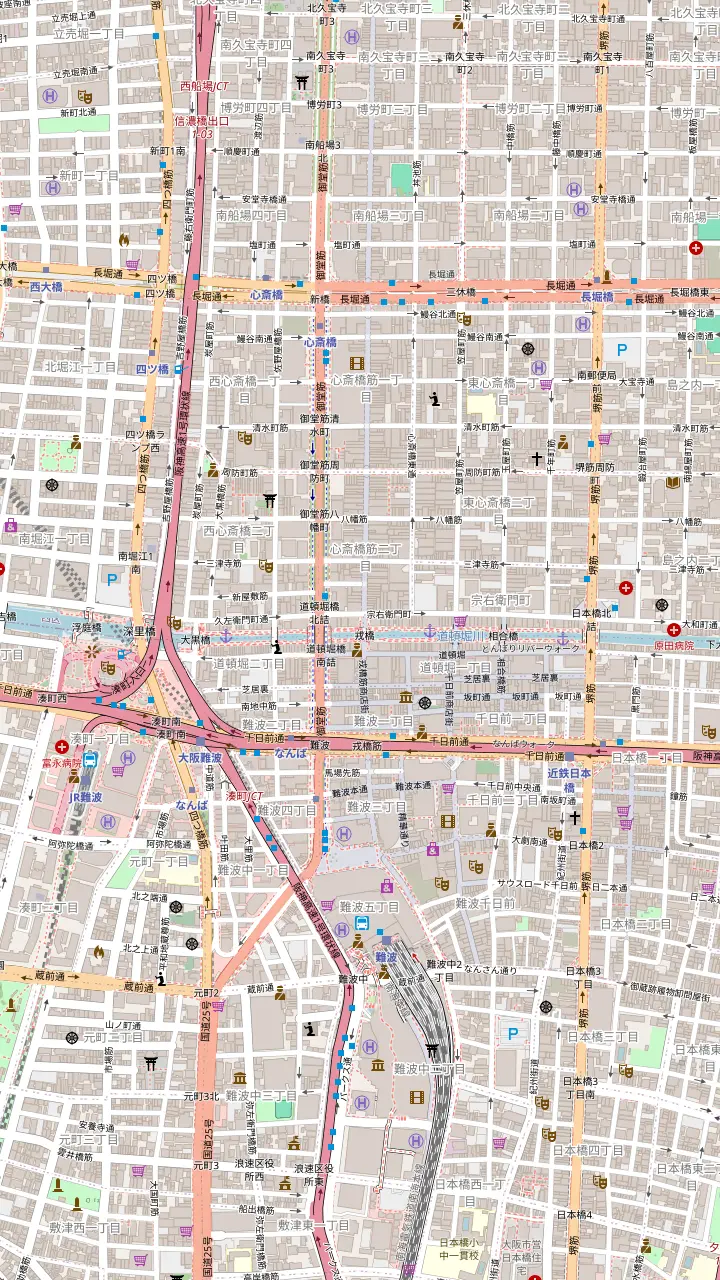
A 26-meter bridge joining Shinsaibashi-suji and Ebisubashi-suji.
Google MapsThe sixth sign, completed on 23 October 2014, stands at 1-10-1 Dotonbori.
Google MapsThe giant crab sign is on the Kani Doraku facade.
Google MapsThe Nakaza Kuidaore Building is marked by Kuidaore Taro, made by a Bunraku puppeteer.
Google MapsThe wheel is 77.4 meters tall and stands at the Don Quijote Dotonbori store.
Google MapsKabuki is performed at the Shochikuza Theater today.
Google MapsTwo alleyways 80 meters long and 3 meters wide, a 5-minute walk from Namba Station.
Google MapsWalk the length of the arcade and you emerge at Ebisubashi bridge.
Google MapsDotonbori is right outside the station.
Google Maps
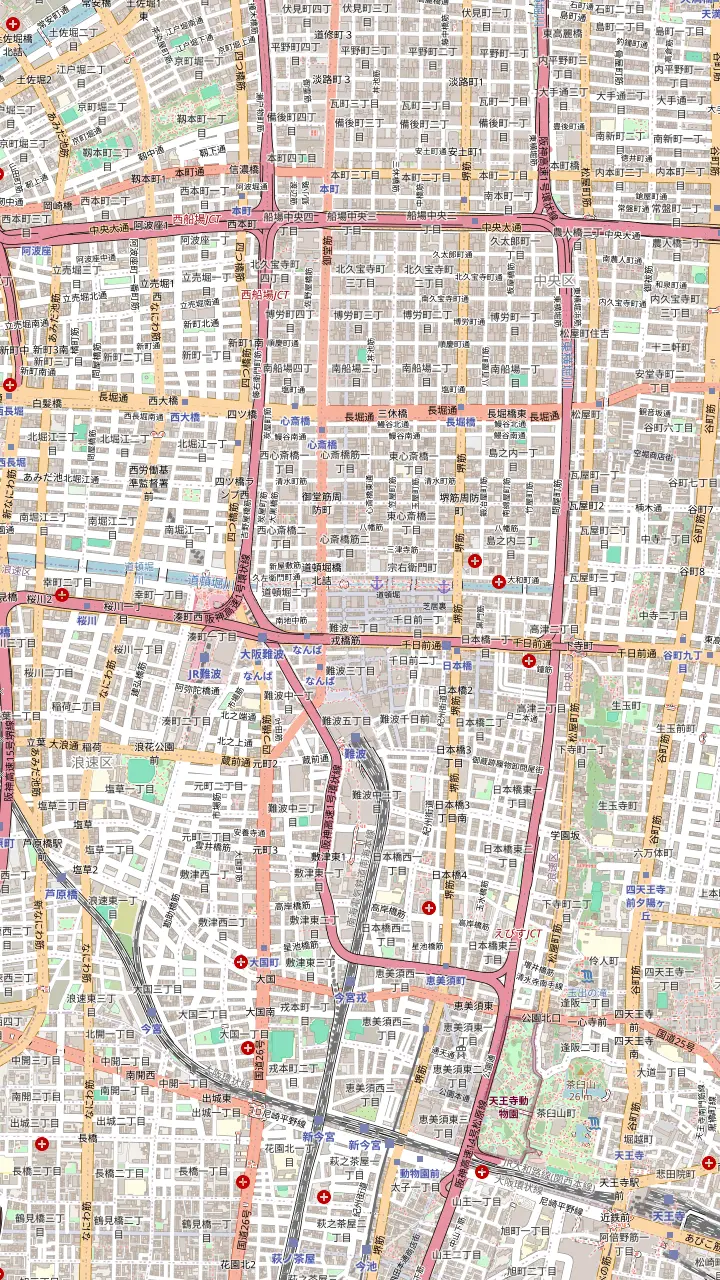
A pedestrian span built in 2008 to connect the Horie district to the canal's southern shore.
Google MapsThe river is about 50 m wide in the west and about 30 m in the east, with the change around this bridge.
Google MapsApart from Nippon-bashi, every bridge across the canal was first built by a private citizen.
Google MapsOne of over 10 small bridges across the river, each with a story of its own.
Google MapsPuppet theater is performed here today.
Google MapsComedy is performed here today.
Google Maps
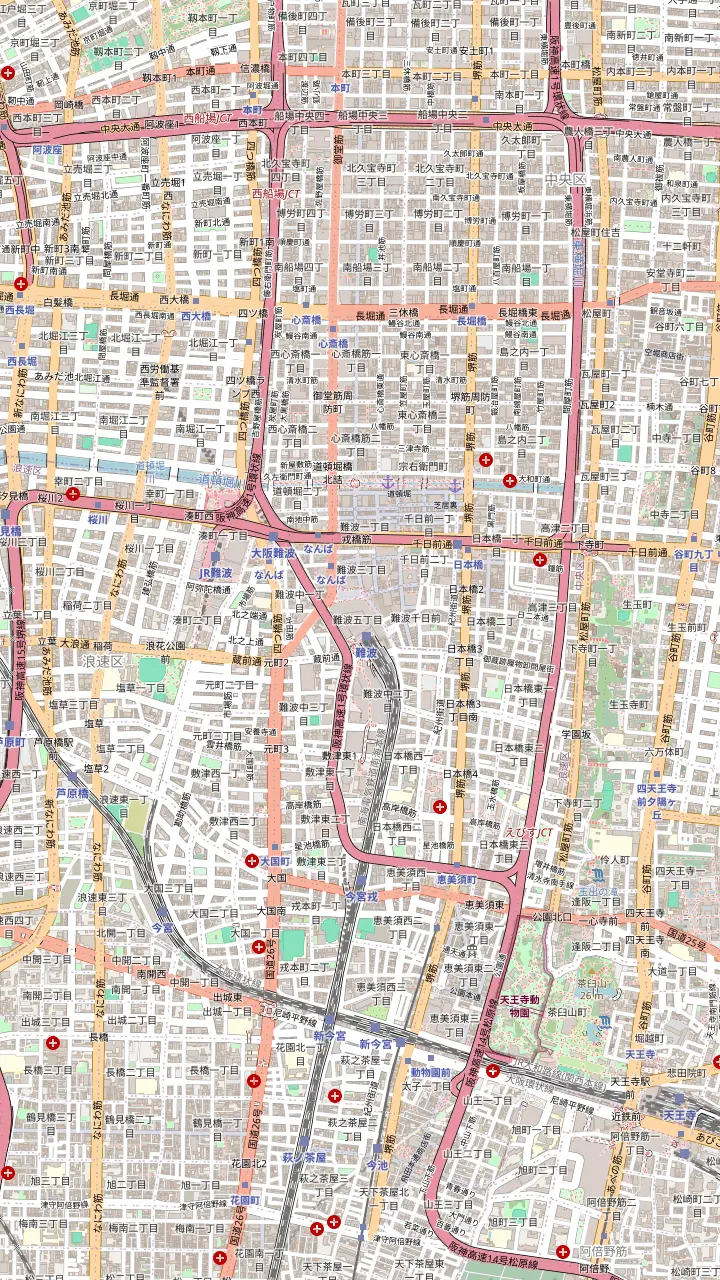
The most widely accepted theory is that Ebisu Bridge was part of the approach to this shrine.
Google MapsShinsekai is famous for Tsutenkaku Tower, Janjan Yokocho Street and a giant pufferfish lantern sign.
Google MapsIts lion-head votive plaque measures 12 meters high, 11 meters wide and 10 meters deep.
Google MapsNamba Parks opened in October 2003, and its rooftop garden holds about 70,000 plants.
Google MapsThe Midosuji Line runs to this station, with an exit to the Shinsaibashi-suji arcade.
Google MapsThe tourism bureau calls it an area for Osaka's younger crowd.
Google Maps
© OpenStreetMap contributors · map data
The short bridge over the canal is where Shinsaibashi meets Namba and where the Glico sign, the crab and the clown all come into view. Here are its story, its names and the best way to use it on a visit.
Editorial team, dotonboririvercruise.click · Updated November 6, 2026 · 6 min of reading
Quick look
- LengthEbisu Bridge is 26 meters long.1
- LinksIt joins Shinsaibashi-suji on the north side with Ebisubashi-suji on the south.1
- AgeThe first bridge dates from 1615, when the canal was developed.2
- RebuiltIt was rebuilt in 2007 with a circular plaza in the middle.3
- NicknamePeople also call it Hikkake-bashi, the Pick-up Bridge.4
A short bridge at a long crossroads
Ebisu Bridge is a 26-meter-long bridge in the heart of Osaka's Minami district, linking Shinsaibashi-suji Shopping Street on the north side with Ebisubashi-suji Shopping Street on the south.1 It is short enough to cross in a minute, and nobody does. A search for the Dotonbori bridge leads here. The span is the place where the district stops to look around, take a picture and decide what to eat.
Two walks end here. The Japan National Tourism Organization says that if you walk the length of the Shinsaibashi arcade you emerge at Ebisubashi bridge in Dotonbori.5 From the other side, the Osaka tourism bureau says that if you go to the end of Namba Ebisubashi Shopping Street you arrive at Dotonbori Ebisubashi.6
That makes the bridge a hinge between two neighborhoods. The tourism organization describes the river as the line that divides Shinsaibashi and Namba, with the bridge as the point where both converge.7 If you are staying on either side, you will cross it often, and that is a good reason to learn what it has seen.
The bridge at a glance
Names, builders and dates
| Feature | What the sources say | Date |
|---|---|---|
| Length | 26 meters, linking two shopping streets1 | Today |
| First bridge | Built when the canal was developed2 | 16152 |
| Name | Approach to Imamiya Ebisu Shrine, the common theory19 | Early use |
| Nickname | Hikkake-bashi, the Pick-up Bridge4 | Today |
| Rebuilding | Circular plaza, spatula railings3,20 | 20073 |
| Neighbor | Ukiniwa-bashi pedestrian span10 | 200810 |
Dates and descriptions come from the Osaka tourism bureau and the Japan Tourism Agency; where a source gives no date, the cell says Today or Early use.12
A bridge as old as the canal
The Osaka tourism bureau writes that the first Ebisu Bridge was built in 1615, when the Dotonbori Canal was developed.2 The Japan Tourism Agency agrees: the bridge was originally built around the same time as the canal, which was completed in 1615.8 The bridge and the waterway belong to the same story, and neither makes much sense without the other.
The agency adds that the bridge appears regularly in sightseeing guides and illustrations from the early modern period and remains the neon-lit hub of the district today.12 It also points out that, apart from Nippon-bashi, which the Tokugawa shogunate built as a public works project, every bridge across the canal was first built by a private citizen.13 That matches the feel of Dotonbori: a place made by people who wanted customers.
Ebisu Bridge is one of many. The Osaka tourism bureau counts over 10 small bridges across the 2.7 km river, such as Aiai Bridge and Ebisu Bridge, each with a name that has a story of its own.14 A pedestrian span called Ukiniwa-bashi was added in 2008 to connect the Horie district to the canal's southern shore.10 A cruise passes under several of them, which is the easiest way to appreciate how close together they stand.
Where the name comes from
Nobody can say for certain why the bridge is called Ebisu. The Osaka tourism bureau notes that there are several theories about the name, and the most widely accepted is that it was part of the approach to Imamiya Ebisu Shrine.19 Ebisu is the god of commercial prosperity, which fits a district that grew up on commerce.
The shopping street at the south end tells the same story. The tourism bureau says Ebisubashi-suji began drawing crowds after the Dotonbori River was completed and Ebisu Bridge was built in 1615, becoming a lively route for pilgrims heading to Toka Ebisu.23 Its Minami itinerary adds that the bridge used to be busy with pilgrims to Imamiya Ebisu and theatergoers to Dotonbori, and is now filled with young people.24
The bridge also carries a nickname that every Osaka local knows. Because people used to hit on strangers on the bridge, the tourism bureau notes, it is also called Hikkake-bashi, the Pick-up Bridge.4 Today it is a meeting point for friends who arrange to find each other under the neon, and a waypoint for travelers following the arcade from Shinsaibashi.
Plan your visit
How will you use the bridge?
Match your plan to a way of using the bridge and the streets next to it.
If I am arriving from Namba
Walk through the shopping street
At its end you arrive at Dotonbori Ebisubashi.6
If I am arriving from Shinsaibashi
Follow the arcade south
Walk its length and you emerge at Ebisubashi bridge.5
If I want the signs in one frame
Stand on the south side
The huge billboards, including the Glico sign, stand there.21
If I want a quieter look
Use the slope to the promenade
A slope leads down to the Tonbori River Walk.22
If I want to see it from the river
Take the 20-minute cruise
The listing runs 20 minutes and starts from $13.
The bridge as rebuilt in 2007
The bridge you cross today is not the one in the old illustrations. The Japan Tourism Agency says that in 2007 it was rebuilt with a circular plaza at the center to accommodate the huge volume of visitors.3 The plaza gives crowds somewhere to stand and photographers somewhere to turn round.
The agency also notes a detail worth looking for: the railings are shaped like okonomiyaki spatulas.20 It is a small nod to the food that Dotonbori is known for, and it is easy to miss while you are looking at the signs. On the east side of the bridge, there is a slope that leads down to the Tonbori River Walk promenade.22
The promenade itself is newer than the bridge's long history suggests. The tourism bureau's convention pages say the Tombori Riverwalk was built in December 2004,9 and about 600 m between Ebisu Bridge and the Nipponbashi and Minatomachi area has now been improved as a place to stroll along the water.18 Use the slope to see the bridge, the signs and the water from below.
Price a view from below
What a cruise under the bridge costs for your group
Add your party and compare three ways to see the bridge from the river.
3 options compared
What a cruise under the bridge costs for your group
Add your party and compare three ways to see the bridge from the river.
- Dotonbori river cruise20 minutes · starting at, per person $13
≈
View - River cruise with drinkDrink discount · starting at, per person $13
≈
View - Walk plus river cruise2 hours · starting at, per person $32
≈
View
From-prices on GetYourGuide, shown at the ECB reference rate. Your exact price is confirmed during booking.
The bridge through time
From the canal to the plaza of today
1615
Canal and first bridge
The canal was completed and Ebisu-bashi was built around the same time.8
2004
Riverwalk built
The Tombori Riverwalk promenade was built in December 2004.9
2007
Bridge rebuilt
A circular plaza went into the center to cope with the visitors.3
2008
Ukiniwa-bashi added
A pedestrian span joined the Horie district to the southern shore.10
2019
Wall art arrives
Dotonbori Art wall art has appeared along the Riverwalk since 2019.11
Crowds, jumps and common sense
The tourism bureau does not hide a less polite tradition. When the Hanshin Tigers win the championship or during major events, it says, young people sometimes jump from the bridge into the Dotonbori River, and it often makes the news.41 That is a description, not a suggestion, and this page does not recommend it.
Think about the water before you think about the jump. The same bureau says the Dotonbori River's water is not particularly clean.40 Add the crowds, the railings and the narrow plaza, and the bridge is a place to watch from rather than a place to leap from. If your trip happens to fall on a big sports night, expect the area to be packed.
On an ordinary evening the bridge asks only for manners. Step aside after your photo, keep your bags close and leave space for the person behind you. The best views of the neon and the sign come from the south side of the span, and the bureau says many visitors take commemorative photos there.21 A few seconds each keeps everybody happy.
Video
Osaka walking guide from Nankai Namba Station to Dotonbori and Ebisu Bridge
Japan Contents on YouTube · Until you tap play, no video is loaded.
There are several theories about the bridge’s name, but the most widely accepted is that it was part of the approach to Imamiya Ebisu Shrine.
On the bridge
A short checklist for Ebisu Bridge
Getting there3
Looking around3
Good manners3
- Take your photo in short turns
- Do not jump: the water is not particularly clean40
- Cruise cancellation is free up to 24 hours before
What stands around the bridge
Food and spectacle crowd the corners. The Osaka tourism bureau lists Kani Doraku with its giant crab sign and the Nakaza Kuidaore Building marked by Kuidaore Taro nearby.27 A Bunraku puppeteer made Kuidaore Taro, which the bureau calls Japan's first robot billboard.28
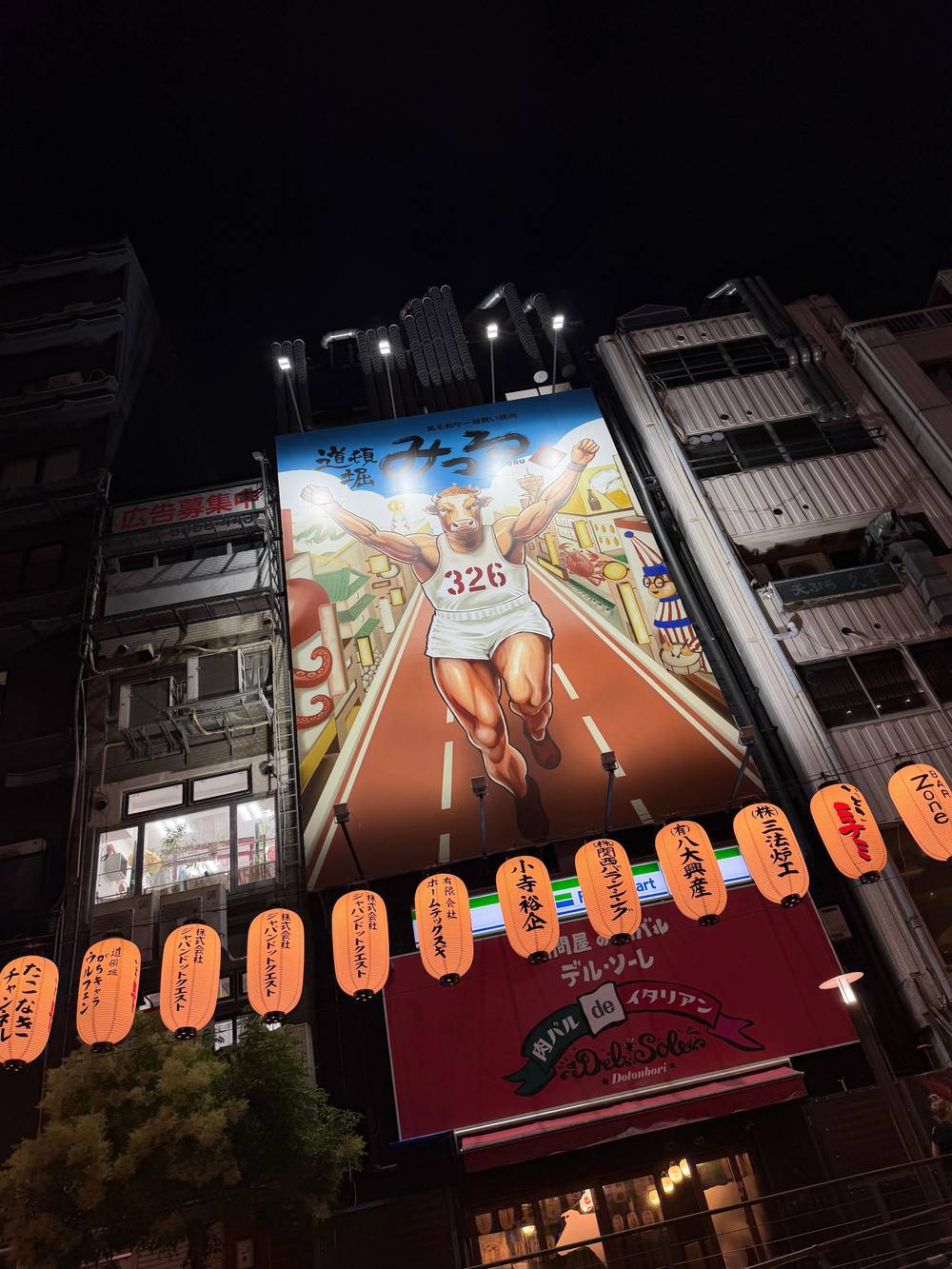
Look up and along the river for the other landmarks. The Don Quijote Dotonbori store is topped by the Ebisu Tower Ferris wheel, which is 77.4 meters tall.29 The Glico sign stands on the south side of the bridge,21 and its address is 1-10-1 Dotonbori.26 The map at the top of this page pins these stops so you can plan the loop before you arrive.
Getting here is simple. Namba Station, with its Nankai and Kintetsu trains and the Midosuji, Sennichimae and Yotsubashi metro lines, sits right beside the district.32 Hozenji Yokocho is a 5-minute walk from Namba Station,31 which makes a calm detour before or after the bridge.
Seeing the bridge from the water
The Japan Tourism Agency describes a popular cruise that runs along the Dotonbori Canal, under Ebisu-bashi Bridge and past the Glico Running Man sign, led by a guide who keeps up a steady commentary in the Osaka dialect.42 From the boat the span looks different: you see the underside and the crowd above you, with the signs behind.
The cruise offered on this site is a 20-minute trip on the Dotonbori River. A night-view photographer advising the tourism bureau calls the moment just before the boat passes under Ebisu Bridge a great photo opportunity.43 The listing starts from $13, with free cancellation up to 24 hours before.
If you would rather stay dry, the Tombori Riverwalk gives a free view of the same bridge from the water's edge, with the Don Quijote store, the Ferris wheel and the Glico sign along the way.44 Whichever you choose, it pays to see the bridge by day and again after dark, since the neon changes its mood completely.
FAQ
Fast, clear answers, short.
How long is Ebisu Bridge in Dotonbori?
The Osaka tourism bureau describes it as a 26-meter-long bridge.1
When was Ebisu Bridge built?
The first bridge was built in 1615, when the Dotonbori Canal was developed.2
Why is it called Ebisu Bridge?
The most widely accepted theory is that it was part of the approach to Imamiya Ebisu Shrine.19
What is Hikkake-bashi?
It means the Pick-up Bridge, because people used to hit on strangers there.4
Was Ebisu Bridge rebuilt?
It was rebuilt with a circular plaza at the center to cope with the volume of visitors.3
Is it safe to jump from Ebisu Bridge?
How do I get to Ebisu Bridge from Namba Station?
Go to the end of Namba Ebisubashi Shopping Street and you arrive at Dotonbori Ebisubashi.6
Sources
- Osaka Convention & Tourism Bureau · Ebisubashi/Ebisu Bridge (OSAKA-INFO EXPERIENCE) ↩
- Osaka Convention & Tourism Bureau · Ebisubashi/Ebisu Bridge (OSAKA-INFO EXPERIENCE) ↩
- Japan Tourism Agency · Cruising the Dotonbori Canal ↩
- Osaka Convention & Tourism Bureau · Ebisubashi/Ebisu Bridge (OSAKA-INFO EXPERIENCE) ↩
- Japan National Tourism Organization · Dotonbori & Shinsaibashi ↩
- Osaka Convention & Tourism Bureau · Namba and Shinsekai itinerary ↩
- Japan National Tourism Organization · Dotonbori ↩
- Japan Tourism Agency · Cruising the Dotonbori Canal ↩
- Osaka Convention & Tourism Bureau (MICE) · Tombori Riverwalk ↩
- Japan Tourism Agency · Cruising the Dotonbori Canal ↩
- Osaka Convention & Tourism Bureau · Tombori River Walk (OSAKA-INFO EXPERIENCE) ↩
- Japan Tourism Agency · Cruising the Dotonbori Canal ↩
- Japan Tourism Agency · Cruising the Dotonbori Canal ↩
- Osaka Convention & Tourism Bureau · Dotonbori (OSAKA-INFO EXPERIENCE) ↩
- Osaka Convention & Tourism Bureau · Hozenji Yokocho Alley ↩
- Osaka Convention & Tourism Bureau · Shinsekai ↩
- Osaka Convention & Tourism Bureau · Shinsaibashi (OSAKA-INFO EXPERIENCE) ↩
- Osaka Convention & Tourism Bureau · Tombori River Walk (OSAKA-INFO EXPERIENCE) ↩
- Osaka Convention & Tourism Bureau · Ebisubashi/Ebisu Bridge (OSAKA-INFO EXPERIENCE) ↩
- Japan Tourism Agency · Cruising the Dotonbori Canal ↩
- Osaka Convention & Tourism Bureau · Ebisubashi/Ebisu Bridge (OSAKA-INFO EXPERIENCE) ↩
- Osaka Convention & Tourism Bureau · Namba and Shinsekai itinerary ↩
- Osaka Convention & Tourism Bureau · Ebisu Bashi-Suji Shopping Street (OSAKA-INFO EXPERIENCE) ↩
- Osaka Convention & Tourism Bureau · A model itinerary for Osaka Minami ↩
- Chuo Ward Office, Osaka City · Dotonbori Glico Sign
- Chuo Ward Office, Osaka City · Dotonbori Glico Sign ↩
- Osaka Convention & Tourism Bureau · Ebisubashi/Ebisu Bridge (OSAKA-INFO EXPERIENCE) ↩
- Osaka Convention & Tourism Bureau · Dotonbori Tourist Guide (gourmet) ↩
- Osaka Convention & Tourism Bureau · Don Quijote Dotonbori Ferris Wheel (OSAKA-INFO EXPERIENCE) ↩
- Osaka Convention & Tourism Bureau · Dotonbori Tourist Guide (gourmet)
- Osaka Convention & Tourism Bureau · Hozenji Yokocho Alley ↩
- Osaka Convention & Tourism Bureau · Dotonbori Tourist Guide ↩
- Osaka Convention & Tourism Bureau · Dotonbori River (OSAKA-INFO EXPERIENCE)
- Osaka Convention & Tourism Bureau · Shinsekai
- Osaka Convention & Tourism Bureau · Namba Yasaka Shrine
- Osaka Convention & Tourism Bureau · Namba Parks (OSAKA-INFO EXPERIENCE)
- Osaka Convention & Tourism Bureau · Namba Parks (OSAKA-INFO EXPERIENCE)
- Japan National Tourism Organization · Dotonbori & Shinsaibashi
- Osaka Convention & Tourism Bureau · Shinsaibashi (OSAKA-INFO EXPERIENCE)
- Osaka Convention & Tourism Bureau · Dotonbori River (OSAKA-INFO EXPERIENCE) ↩
- Osaka Convention & Tourism Bureau · Ebisubashi/Ebisu Bridge (OSAKA-INFO EXPERIENCE) ↩
- Japan Tourism Agency · Cruising the Dotonbori Canal ↩
- Osaka Convention & Tourism Bureau · Photo spots for Osaka’s nightscape (Discover Osaka) ↩
- Osaka Convention & Tourism Bureau · Tombori River Walk (OSAKA-INFO EXPERIENCE) ↩
Also worth reading